
Why we do all that we do
A bi-weekly newsletter where I share news, opinion, grant opportunities, success tools and tips on personal growth.
Oliver's Note
Why we do all that we do
Scientists are motivated by many things, but a personal encounter with disease is often central to their origin story.
It's the patients. And now there is a new organization that amplifies their voices.
Founded by four visionaries, including my friend Matthew Zachary, We The Patientsis part of the cancer patient rights movement.
Disclosure: MZ has run episodes of my podcast, Standard Deviation, on his podcast Out of Patients.
Here is what We the Patients is all about:
We The Patients aims to organize the cancer community and introduce the Cancer Patient Protection Act (CPPA) to guarantee patient rights.
The CPPA proposes assigning a certified, independent Healthcare Steward to each patient to challenge insurance barriers and prevent financial devastation.
The legislation seeks to stop denials, delays, and surprise costs, ensuring patients receive essential care, including transport, fertility, and mental health services, as stated by Matthew Zachary, Co-Founder of We The Patients.
According to their website, WTP organizes patients and families into a single issue, nonpartisan voting bloc. Their purpose is to pass consumer protection laws in every state that stop insurance delays and denials and make sure no one goes broke for getting care.
On a personal note - I was privileged during my cancer journey to have excellent insurance and to be able to access care at a series of NCI-designated cancer centers, most notably UT MD Anderson. But I am also aware that many, many Americans do not have that privilege. This is why I support this effort and wanted to share it with you.
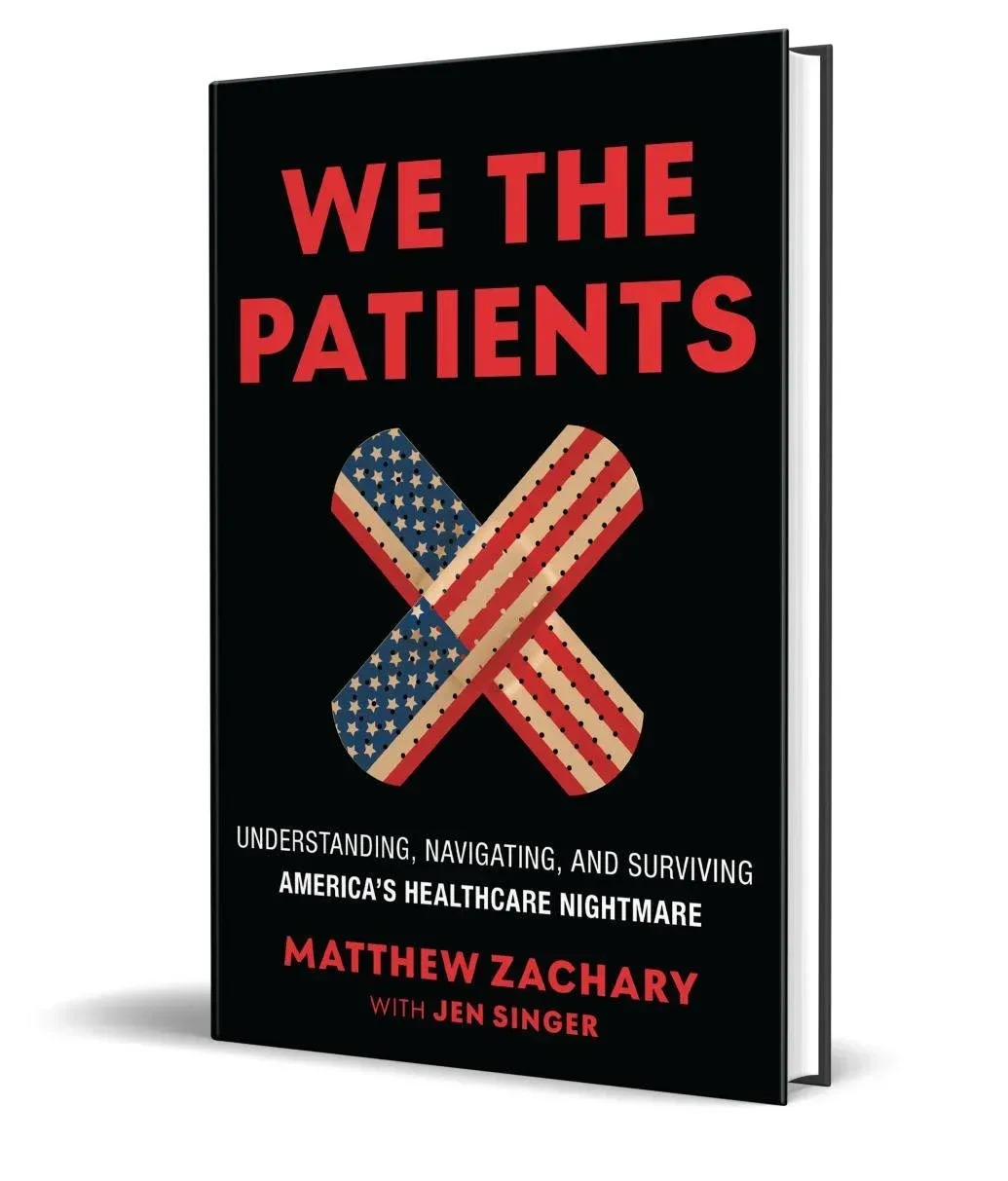
MZ has also written a book- check it out.
Here is just one blurb from the website:
“We The Patientsrestores humanity to healthcare. Matthew blends critique with hope and reminds us what’s at stake when we stop listening to patients.”
— Henry S Friedman, MD, Deputy Director of the Preston Robert Tisch Brain Tumor Center at Duke University Medical Center
In Case You Missed It
One Year Later: How Centralized NIH Peer Review is Strengthening Efficiency, Competition, and Transparency
In a recent blog post, Dr. Bruce Reed, Acting Director of the Center for Scientific Review at NIH provides an update on important changes.

The main points:
Successful Consolidation:In March 2025, NIH consolidated 24 separate review offices into the CSR to increase efficiency, consistency, and scientific competition.
Operational Efficiency:Centralization has significantly lowered per-application review costs by leveraging economies of scale, reducing the need for redundant management and support staff.
Crisis Resilience:The unified structure allowed NIH to quickly navigate a 43-day government shutdown in 2025, successfully reviewing 32,000 applications that might have otherwise been cancelled.
New Study Sections:To handle the 30,000 additional applications now under its purview, CSR is creating 52 new chartered study sections and recurring special emphasis panels.
Scientific Grouping:Applications are now grouped by scientific topic rather than by the funding Institute or Center (IC), ensuring more direct competition and better-aligned expertise.
Standardized Practices:Review procedures for career development, training, and multicomponent grants have been standardized across the agency, supported by a centralized training program for all NIH review officers.
Simplified Review Framework:The transition supports the ongoing implementation of new policies, including the [Simplified Review Framework](https://grants.nih.gov/grants/guide/notice-files/NOT-OD-24-010.html), to streamline the evaluation of research merit.
What particularly caught my eye was theScientific Grouping- before these changes, one set of mechanisms that was typically reviewed in the individual Institutes and Center (e.g. at NCI) rather than at CSR were those for early career investigators: your F and K awards, T32 and R25 training and education grants. This did indeed create study sections that were mechanism focused and were tasked with reviewing a wide spectrum of science. If these will now be grouped thematically, will the study sections be more broad in terms of mechanism? I'd be very interested to learn what people submitting and reviewing for NIH are seeing.

Growth Mindset
The Specific Aims Page is Your Most Important Page
In an NIH application, the Specific Aims page carries extraordinary weight.
Why? Because the Aims Page is likely the one section that every reviewer — including those not assigned to your application — will read.
It's also the document the Scientific Review Officer uses to match your proposal to the right reviewers.
A strong Aims page doesn't just summarize your project; it persuades. It establishes significance, states your hypothesis clearly, and shows that your aims are feasible and interconnected without being mutually dependent.
Write it first, revise it often, and share it widely for feedback.
The takeaway: The Aims page is your grant's first impression — treat it accordingly.
Success Tools
Rigor by Design: NIH Sharpens Its Reproducibility Expectations
NIH has reinforced its commitment to replication and reproducibility with a new initiative tied to its Gold Standard Science plan, alongside a freshly posted Highlighted Topic encouraging investigator-initiated work on rigorous research practices.
The announcement, published April 28, 2026, reminds applicants and awardees that the reliability of biomedical research underpins public trust and the eventual benefit to patients.

For applicants, NIH points back to four familiar but easily underdeveloped areas reviewers will assess:
rigor of prior research,
rigorous experimental design,
consideration of relevant biological variables (such as sex, age, or genetic background), and
authentication of key resources like cell lines and antibodies.
Practical tools — including the Experimental Design Assistant, sample size guidance, and authentication plan examples — are linked from NIH's reproducibility resources page.
Importantly, the expectation does not stop at submission. Recipients are expected to maintain and document rigorous practices throughout the lifecycle of the project, with progress reports ideally describing steps taken to ensure unbiased results, challenges encountered, and the availability of data and code.
The takeaway: Treat rigor as a thread that runs from your Specific Aims through your final RPPR — not a checkbox at submission. A short paragraph in each progress report describing how your design choices protected against bias is increasingly what "good standing" looks like.