
Reclaim Your Ground
You've built the career. Now make your next move from clarity — not exhaustion.
You've spent a decade, maybe more, doing the work. The grants. The lab. The students. The committees. And you're good at it — which is exactly why more of it keeps landing on your desk.
Somewhere in the middle of all that, the career you built started to feel less like yours.
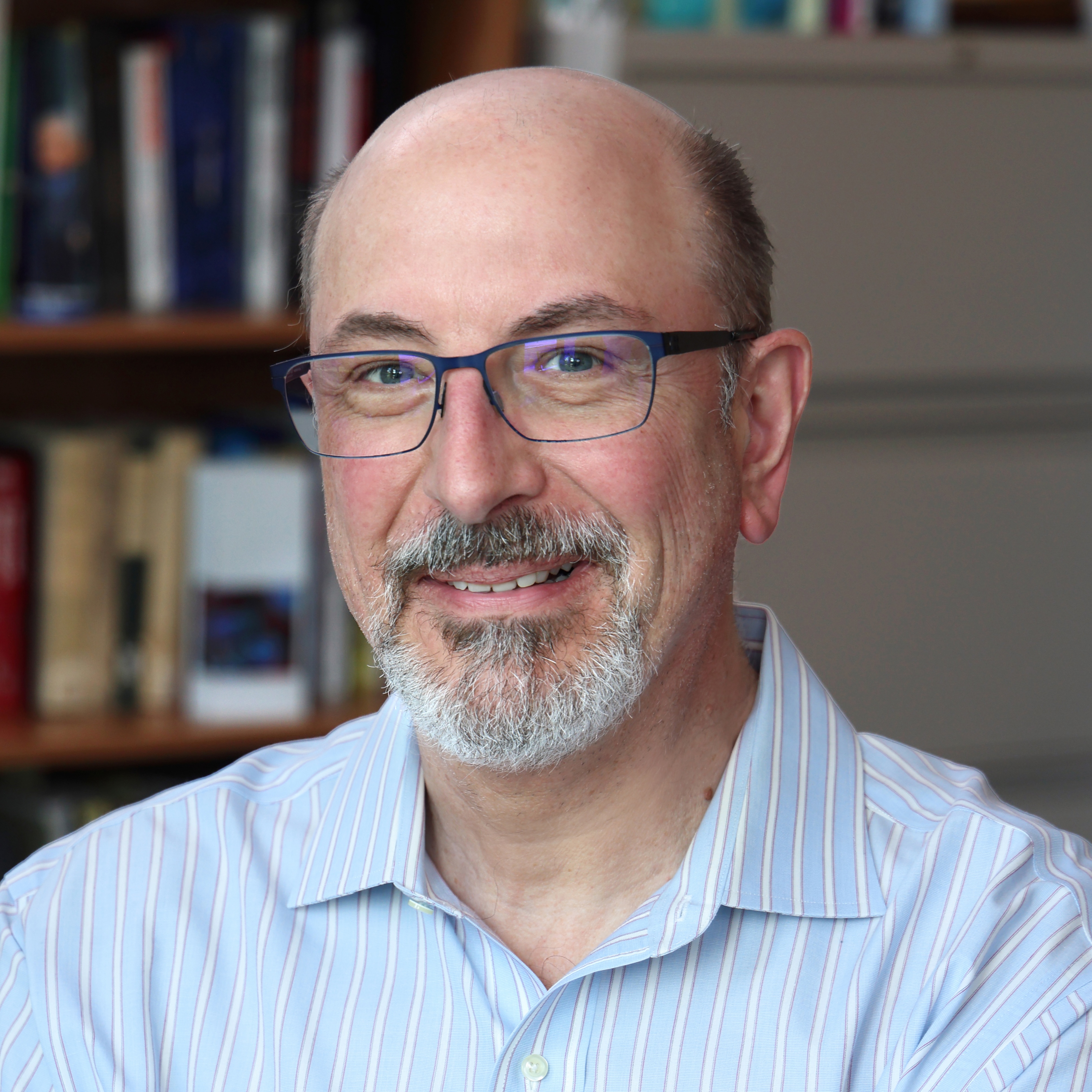
I'm Oliver Bogler.
I spent over 30 years in academic biomedical science before becoming a coach, and I work with Assistant and Associate Professors who are successful by every external measure — and quietly running on empty. Not burned out in a dramatic way. Just making important decisions from a depleted place, and feeling it.
That's a solvable problem. And you don't have to leave academia to solve it.

Whom I serve and how

I support Scientists...
From early-career to senior leaders - I can support you, I've been there. And with 3 career transitions since I turned 50 I understand the challenges.

... with Coaching...
Careers and lives are not straight paths and the journey can be tough. I’m here to help you reach your full potential - at any career stage.
See more 👇🏼

... Consulting...
Need help with a funding proposal? I have extensive experience writing, reviewing & giving grants. I can guide you every step of the way.

... and a Newsletter.
A newsletter where I share news, opinion, grant opportunities, success tools and tips on personal growth - every other Tuesday.
My Coaching Offerings

Get Clarity on Pressure
A good place to start.
Pressure changes how you think, decide, and lead — often without you realizing it.
The Energy Leadership Index is a validated assessment that shows you exactly how stress is shaping your decisions right now, followed by a one-on-one debrief to make sense of what it means for your career.
If you're not ready for a full coaching commitment, start here.

Reclaim Your Ground Coaching Program
The full engagement.
A 12-week, one-on-one coaching program designed specifically for Assistant and Associate Professors in the biomedical sciences. We work through three phases — building your internal foundation, reclaiming your energy and boundaries, and clarifying where you want to go next — so you can lead your career with intention instead of just keeping up with it.
Why I do this work
Not sure if any of this is for you?
Why not take a 12 question/3 minute quiz to
learn how much you rely on survival mode?

What My Clients Say

Dr. Monica W., Ohio
Coaching Client (10/10)
“I gained a renewed confidence in my abilities and knowledge. Before, I wondered if I even belonged in academia, but now I am confident in my seat at the table and ability to contribute to the conversation.”

Dr. Ruth W., Tennessee
Grant Consulting Client (NIH K08)
"I am very, very, grateful for your help. You helped me identify my strengths and communicate effectively. Your helpful and timely insight on aims, research strategy, letters, CDP, Biosketch —- literally every aspect of the application was critical!"
About Oliver

BA, Cambridge
PhD, Ludwig Cancer Research
Postdocs Salk & Ludwig Cancer Research
Faculty at VCU, Henry Ford Hospital and MD Anderson – tenured Professor

NCI funded lab for 15 years (23 grants >$13M; 4 R01s as PI; R21
>80 papers; H-index 41; i10-index 74 & reviewed for >50 journals
Instrumental in getting MD Anderson’s first Brain SPORE as Co-PI; led Brain Tumor Research & Co-Lead Cancer Center Brain Tumor Pgm. for 7y
25 US and intl. grant review committees for career development, research and program project grants incl. permanent membership and chairing of NIH Study Sections for R01/R21 and F awards.

SVP of Academic Affairs at MD Anderson – oversaw P&T for 1,700 faculty members, support of 3,000+ fellows, students, interns etc, accreditation;
Served for 5 years at NCI as Director of the Center for Cancer Training, overseeing ~$210M in F, K, T and other awards for early career scientists; led team that created the K32; supported ~1,000 intramural fellows.
Grant & Growth
A bi-weekly newsletter where I share news, opinion, grant opportunities, success tools and tips on personal growth.
Frequently Asked Questions
Q: What makes the Energy Leadership Index® (ELI) different from other assessments?
A: Unlike personality assessments such as Myers-Briggs or DiSC that measure relatively fixed traits, the ELI measures something dynamic: your current level of energy and consciousness, which can shift based on circumstances and mindset. This matters because research shows that people who experience higher, more anabolic levels of energy report significantly greater satisfaction across key life areas including work, relationships, communication skills, financial success, and leadership ability. The ELI gives you a baseline measurement of how you perceive and respond to challenges, creating the self-awareness that research identifies as essential for sustainable behavioral change. And because energy levels are malleable, not fixed traits, coaching can help you consciously shift toward more empowering states.
References:
The Energy Leadership Index® Assessment: Who It's For, How it Works, and 5 Powerful Benefits (https://www.ipeccoaching.com/blog/energy-leadership-index)
Wang, Q., Lai, Y.-L., Xu, X. & McDowall, A. The effectiveness of workplace coaching: a meta-analysis of contemporary psychologically informed coaching approaches. J. Work-Appl. Manag. 14, 77–101 (2021).
Q: Is there scientific evidence that coaching actually works?
A: Yes. Meta-analyses of randomized controlled trials, the gold standard in social science research, show coaching produces a moderate overall effect size (g = 0.50), with particularly strong impacts on goal attainment (g = 1.29) and cognitive-behavioral activities (g = 1.28). Importantly, integrative coaching approaches like iPEC's Core Energy Coaching, which combines cognitive-behavioral, solution-focused, and positive psychology frameworks, demonstrate significantly higher effectiveness than single-mode approaches (g = 0.71 vs. 0.45).
References:
de Haan, E. & Nilsson, V. O. What Can We Know about the Effectiveness of Coaching? A Meta-Analysis Based Only on Randomized Controlled Trials. Acad. Manag. Learn. Educ. 22, 641–661 (2023).
Wang, Q., Lai, Y.-L., Xu, X. & McDowall, A. The effectiveness of workplace coaching: a meta-analysis of contemporary psychologically informed coaching approaches. J. Work-Appl. Manag. 14, 77–101 (2021).
Q: Do the benefits of coaching last, or do they fade after the engagement ends?
A: Research shows coaching produces durable change. In a study of 248 individuals reassessed 12 months after a career intervention, 87% maintained sustainable positive outcomes, including reduced career decision difficulties and high levels of life satisfaction. Additional longitudinal research confirms that goal self-efficacy and career self-directedness remain stable for up to a year post-intervention.
References:
Milot-Lapointe, F. & Le Corff, Y. Predicting Outcomes of a Manualized Individual Career Counseling Intervention Over a One-Year Follow-Up From Trajectories of Change in Career Decision Difficulties. J. Career Assess. 32, 745–759 (2024).
Perdrix, S., Stauffer, S., Masdonati, J., Massoudi, K. & Rossier, J. Effectiveness of career counseling: A one-year follow-up. J. Vocat. Behav. - J VOCAT BEHAV 80, (2012).
Q: Can coaching help with burnout and work-related stress?
A: Absolutely. A randomized clinical trial at the Mayo Clinic found that physicians who received six professional coaching sessions experienced a 19.5% decrease in emotional exhaustion and a 17.1% reduction in overall burnout—while the control group saw burnout increase. Participants also reported measurable improvements in quality of life and resilience. Coaching helps individuals access personal strengths and develop skills to handle work-related stressors more effectively.
Reference:
Dyrbye, L. N., Shanafelt, T. D., Gill, P. R., Satele, D. V. & West, C. P. Effect of a Professional Coaching Intervention on the Well-being and Distress of Physicians: A Pilot Randomized Clinical Trial. JAMA Intern. Med. 179, 1406–1414 (2019).
Q: What kind of return on investment can people expect from coaching?
A: Studies document substantial ROI for executive and professional coaching. Research by Metrix Global identified a 788% ROI based on productivity increases and leadership retention. A separate study reported 689% ROI with total monetary benefits exceeding $3.2 million—using a conservative methodology that discounted participant estimates by 50%. Beyond direct financial returns, organizations report improved teamwork, increased client satisfaction, and enhanced leadership behaviors.
References:
The ROI of Executive Coaching. American University https://www.american.edu/provost/ogps/executive-education/executive-coaching/roi-of-executive-coaching.cfm.
Parker‐Wilkins, V. Business impact of executive coaching: demonstrating monetary value. Ind. Commer. Train. 38, 122–127 (2006).

© 2026 Oliver Bogler Coaching and Consulting - All Rights Reserved.